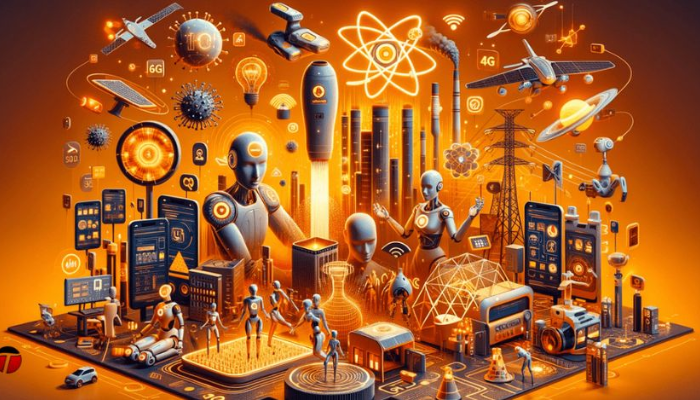
The concept of droven io future of ai is rapidly gaining attention as artificial intelligence continues to reshape how humans interact with technology, data, and digital ecosystems. In a world where automation and intelligent systems are becoming the backbone of innovation, platforms like Droven Io symbolize a new wave of AI-driven transformation. Businesses, creators, and developers are increasingly exploring how AI can enhance productivity, decision-making, and user experience across industries.
As we step deeper into the digital age, the droven io future of ai narrative reflects more than just technological advancement—it represents a shift in how intelligence is integrated into everyday tools. From predictive analytics to autonomous systems and machine learning optimization, AI is no longer a futuristic concept; it is a present-day reality evolving at an unprecedented pace. This article explores that evolution in depth, analyzing how such platforms could shape the future of artificial intelligence.
The Evolution of droven io future of ai in Modern Technology
The droven io future of ai begins with understanding how AI systems have evolved over the past decade. Artificial intelligence has transitioned from simple rule-based algorithms to complex neural networks capable of learning and adapting in real time. This evolution has made AI more accessible, scalable, and impactful across industries such as healthcare, finance, education, and entertainment.
In today’s technological landscape, AI platforms are no longer isolated tools. Instead, they function as integrated ecosystems that support automation, prediction, and optimization. The concept behind droven io future of ai reflects this shift toward interconnected intelligence systems that continuously learn from data inputs and improve performance over time. This progression is crucial in enabling smarter applications that respond dynamically to user needs.
Another key aspect of this evolution is the democratization of AI technology. Tools that were once limited to large corporations are now available to startups and independent developers. The droven io future of ai represents this accessibility trend, where innovation is no longer restricted by technical barriers but driven by creativity and data utilization.
How droven io future of ai is Transforming Industries
One of the most significant impacts of droven io future of ai is its ability to transform traditional industries. In healthcare, AI-powered systems are enhancing diagnostics, predicting diseases, and improving patient care. Machine learning models analyze vast datasets to identify patterns that were previously impossible for humans to detect.
In finance, the droven io future of ai is revolutionizing risk management and fraud detection. Algorithms can now analyze transaction behaviors in real time, providing secure and efficient financial ecosystems. This not only improves security but also enhances customer trust and operational efficiency across financial institutions.
Similarly, in education and entertainment, AI is reshaping content delivery and user engagement. Personalized learning systems and recommendation engines are direct outcomes of the droven io future of ai, ensuring users receive tailored experiences that match their preferences and learning styles. This level of personalization was unimaginable a decade ago but is now becoming standard.
The Role of Machine Learning in droven io future of ai
At the heart of the droven io future of ai lies machine learning, a powerful subset of artificial intelligence that enables systems to learn from data without explicit programming. Machine learning models are responsible for enabling predictive analytics, natural language processing, and image recognition technologies that power modern AI applications.
The growth of machine learning has significantly influenced the direction of the droven io future of ai, making systems more adaptive and intelligent. These models continuously improve through exposure to new data, allowing AI platforms to evolve dynamically and deliver more accurate outputs over time.
Furthermore, deep learning—a more advanced form of machine learning—plays a critical role in enhancing AI capabilities. Neural networks mimic human brain functionality, enabling systems within the droven io future of ai framework to process complex datasets and make highly accurate predictions. This technological advancement is driving innovation across industries and redefining what machines can achieve.
Challenges and Ethical Concerns in droven io future of ai
While the droven io future of ai offers immense potential, it also raises important ethical and technical challenges. One of the primary concerns is data privacy. As AI systems rely heavily on user data, ensuring that this information is protected and used responsibly is crucial for maintaining trust.
Another challenge lies in algorithmic bias. The droven io future of ai must address the risk of biased data influencing AI decisions. If not properly managed, this can lead to unfair outcomes in areas such as hiring, lending, and law enforcement. Developers must prioritize fairness, transparency, and accountability when designing AI systems.
Additionally, there is growing concern about job displacement due to automation. As AI continues to advance under the droven io future of ai framework, certain repetitive tasks may become fully automated. While this creates efficiency, it also requires societies to adapt by reskilling workers and preparing for new job categories that AI will generate.
The Future Potential of droven io future of ai
The long-term vision of droven io future of ai is centered around creating highly intelligent, autonomous systems capable of functioning with minimal human intervention. These systems could manage complex tasks, optimize business operations, and even assist in scientific discoveries.
One of the most exciting aspects of this future is the integration of AI with other emerging technologies such as blockchain, IoT, and quantum computing. The droven io future of ai could serve as a foundation for interconnected digital ecosystems where devices and systems communicate seamlessly and intelligently.
Moreover, the future may see AI becoming more emotionally aware and contextually intelligent. This means systems within the droven io future of ai framework could better understand human emotions, preferences, and behaviors, leading to more natural and meaningful interactions between humans and machines.
Conclusion
The droven io future of ai represents a powerful shift in how artificial intelligence is developed, applied, and experienced across the world. From transforming industries to enhancing daily life, AI is becoming an essential part of modern innovation. While challenges such as ethics and data privacy remain, the potential benefits far outweigh the limitations when managed responsibly.
As technology continues to evolve, the droven io future of ai will likely play a key role in shaping smarter, more efficient, and more connected digital ecosystems. The future of AI is not just about machines becoming intelligent—it is about creating systems that enhance human capability and redefine the boundaries of what is possible.
FAQs
1. What does droven io future of ai mean?
It refers to the conceptual evolution of AI systems and platforms like Droven Io shaping future digital intelligence.
2. How is AI impacting modern industries?
AI improves automation, decision-making, personalization, and efficiency across healthcare, finance, education, and more.
3. What role does machine learning play in AI development?
Machine learning enables systems to learn from data and improve performance without explicit programming.
4. Is AI replacing human jobs?
AI automates repetitive tasks, but it also creates new job opportunities in tech-driven fields.
5. What are the risks of AI development?
Key risks include data privacy issues, bias in algorithms, and ethical concerns.
6. How does AI improve user experience?
AI provides personalized recommendations, faster responses, and smarter digital interactions.
7. What is the future of AI technology?
AI will become more autonomous, integrated, and capable of complex decision-making.
8. Can AI think like humans?
AI can simulate certain human-like behaviors but does not possess true consciousness.
9. Why is AI important for businesses?
AI enhances productivity, reduces costs, and improves customer engagement.
10. What industries benefit most from AI?
Healthcare, finance, education, marketing, and technology sectors benefit significantly from AI advancements.